
The Rise of the Home Office
Why It Matters Now and How It Adds Real Value to Your Home

Not long ago, a “study” was a nice-to-have. Today, it’s a buyer expectation, because the way we live (and work) has changed. The modern home isn’t just a place to eat, sleep, and relax. It’s also where many Australians log on, take Zoom calls, manage a side business, study, and handle life admin. And when a home supports that reality, buyers don’t just like it, they often pay more for it, or compete harder to secure it.
This shift isn’t a trend that’s fading out. Australian data shows working from home is still a major part of employment life. The Australian Bureau of Statistics reports that 36% of employed Australians usually worked from home (August 2025). And broader polling suggests that nearly half of employed Australians work from home at least some of the time (46%, June 2025).
When you combine that with hybrid work patterns and “always-on” digital life, it’s easy to see why buyers increasingly look for homes that can comfortably accommodate focused work.
So what does that mean for sellers? It means the home office is no longer a “bonus room.” It’s a value driver.
Why home offices have become a buyer priority
Work-from-home is now embedded in daily life
During the pandemic, working from home surged out of necessity. What’s more telling is that it stayed, at scale, after restrictions ended. ABS data shows WFH rates remain elevated compared with pre-COVID norms, and researchers note the shift has been dramatic relative to the past.
This matters because property demand follows lifestyle. When a large share of buyers either works from home now (or wants the option in future) homes without a workable space can feel compromised. Buyers don’t simply evaluate how many bedrooms a home has; they evaluate whether the home fits how they live today.
Online search behaviour reflects the new must-haves
Buyers are telling the market what they want through the words they type into search bars. Australia’s National Housing Supply and Affordability Council highlighted that demand remains elevated for larger, higher quality dwellings suited to working from home, and noted Domain reporting that buyers were increasingly using terms like “study” when searching online.
In plain language: people are actively hunting for homes that can support work and study. Because that capability now represents comfort, convenience, and future-proofing.
The “function value” is just as important as the price premium
Sometimes sellers focus only on whether a home office adds a dollar figure to the sale price. In reality, the value comes in two ways:
Asking-price value: In many markets, a well-presented office/study can lift perceived quality and desirability, helping support a stronger price position or sharper buyer competition.
Functional value: Buyers may stretch further financially for a home that reduces daily friction, less commuting, better work-life flow, a dedicated place to focus, and the ability to manage family life and work under one roof.
Even Domain notes that the value can vary by market and buyer profile, but the demand for WFH-capable homes is clearly part of the conversation.
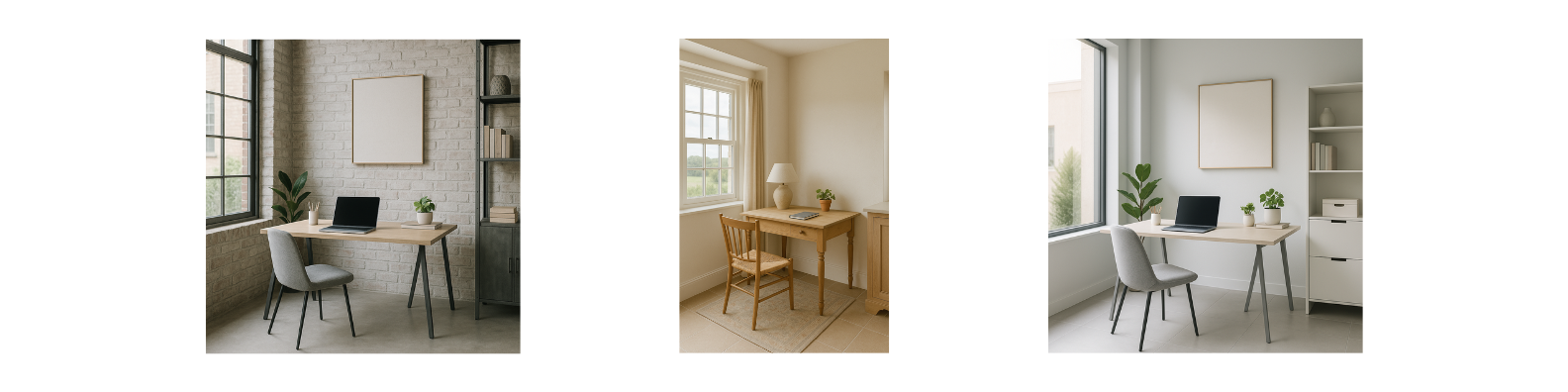
How a home office adds value to a home sale
1) It increases your buyer pool
In a tight market, more buyers means more competition, and competition is what ultimately drives stronger sale results.
When your home clearly offers a dedicated or flexible work zone, it immediately speaks to a wide range of buyers with different lifestyle needs. Hybrid workers who split their week between home and the office see instant practicality.
Fully remote employees value a space that supports focus and professionalism.
Small business owners look for separation between work and living, while families appreciate somewhere for homework, study, and daily admin.
Students and teenagers need quiet zones, and downsizers often see an office nook as a hobby space or reading retreat.
By catering to all of these buyer groups, your home feels more versatile and future-proof.
That broader appeal increases inspection numbers, builds emotional confidence, and often creates multiple interested parties—one of the most powerful drivers of better sale outcomes.
2) It improves how your home “lives” during inspections
A well-presented home office changes how buyers feel as they walk through your home.
Instead of questioning where a desk might fit or how they’d make the space work, they immediately think, “This would work for me.”
That sense of clarity removes friction from the decision-making process. When buyers don’t have to mentally redesign a room, they relax, engage emotionally, and start imagining their daily life in the home.
This mental ease builds confidence in the property as a whole, making it feel functional, well thought out, and ready to move into. And in real estate, confident buyers don’t hesitate. They act decisively.
3) It signals a well-maintained, modern home
A home office done properly sends a powerful message to buyers about how the home has been lived in and cared for.
When the space looks intentional, light, uncluttered, and ready to use, it signals thoughtful planning rather than an afterthought. Buyers subconsciously read this as a sign of good upkeep and pride of ownership.
They often generalise from what they see: if the home office is organised, functional, and well-presented, they assume the same care has been applied throughout the rest of the home. This perception builds trust.
A well-presented office suggests systems, order, and maintenance. Qualities buyers value highly when making one of the biggest purchases of their lives.
Instead of seeing potential problems or future work, they see a home that feels stable, well-managed, and easy to move into.
That sense of reassurance can significantly influence both buyer confidence and willingness to pay.
4) It gives you stronger listing language and marketing angles
Online listings live and die by photos and features, especially in a market where buyers are filtering and shortlisting quickly.
Clear, purposeful language helps your property stand out in crowded search results. Being able to market features such as:
“Dedicated home office”, which signals focus and functionality
“Study nook”, ideal for compact or multi-use homes
'“Work-from-home ready”, appealing to modern lifestyles
“Flexible second living/study space”, showing adaptability
…adds immediate relevance to your listing. These terms speak directly to how buyers live today, encouraging more clicks, longer listing views, and higher inspection interest.
When buyers recognise their needs reflected in the features, they’re far more likely to engage and take the next step.

What buyers actually want in a home office space
A “home office” doesn’t have to be a separate room, but it does need to feel genuinely functional.
During inspections, buyers subconsciously assess whether the space would actually work in their day-to-day life. They look for:
Good light, either natural or well-designed, because dark spaces feel uninviting and impractical.
Noise control matters too. Buyers want some separation from living or TV areas.
Connectivity is increasingly important, including power points, charging space, and somewhere for a modem or router.
Comfort plays a role, with enough room for a proper desk and chair rather than something squeezed in as an afterthought.
Storage should feel minimal and organised, as clear surfaces suggest ease and order.
Finally, flexibility is key. Buyers love spaces that can adapt to guests, hobbies, or future needs.
Ultimately, buyers want a home that supports real life, not a staged idea that falls apart under closer inspection.

How to present a home office so it adds maximum sale impact
Here’s where sellers can win big. Because many homes could offer a home office, but it’s not obvious until it’s styled correctly.
1) Make the purpose unmistakable
If it’s a spare room filled with boxes, buyers will treat it as storage, not value. Convert it into a clear “work zone”:
Desk
Chair
Lamp
A single framed print or minimal artwork
A plant (simple, fresh, not cluttered)
The goal is to remove doubt and eliminate the need for buyers to mentally reinterpret the space.
Buyers should immediately understand the room’s purpose the moment they step inside. When a space is clearly defined, it feels intentional and functional, rather than confusing or underutilised.
This clarity helps buyers relax and focus on how the home will support their lifestyle, instead of questioning how they would make it work.
A clearly presented room builds confidence, strengthens emotional connection, and makes the home feel ready to move into rather than needing adjustment.
2) Keep styling calm and cohesive
Home offices sell best when they look quiet and focused. Avoid:
Busy colours
Too many accessories
Loud patterns
Random storage piles
Instead, focus on a neutral palette layered with soft textures, a single considered pop of colour, and clean, simple lines. This approach creates a calm, cohesive look that feels modern and inviting without overwhelming the space.
Neutral tones allow buyers to imagine their own belongings, while texture adds warmth and interest.
A restrained pop of colour gives personality without distraction, and clean lines reinforce a sense of order and functionality.
Together, these elements help the space feel balanced, purposeful, and easy to live in.
3) Show scale and practicality
A tiny desk shoved into a corner can easily backfire, making a space feel cramped, impractical, or like an afterthought rather than a genuine work zone.
If you’re working with a nook or smaller area, thoughtful choices are essential to maintain both function and appeal.
Use a slimmer desk that fits the scale of the space while still allowing enough surface area to look usable.
Floating a shelf above can add storage and visual interest, but keep it minimal. One or two carefully chosen items only, to avoid clutter.
Adding a small rug helps define and “zone” the area, signalling to buyers that this is a deliberate workspace.
Most importantly, ensure the chair can slide back comfortably.
Buyers notice functionality instinctively, and if the space looks awkward to use, they’ll discount its value.
4) Use lighting to sell “workability”
A dim space instantly feels depressing and impractical, especially when buyers are assessing whether a room could support focused work.
Light plays a critical role in how functional and appealing a home office feels.
Start by opening blinds and curtains fully to maximise natural light, and make sure windows are clean so light isn’t dulled or filtered unnecessarily. If natural light is limited, add a warm lamp to create a softer, more inviting glow rather than relying solely on harsh overhead lighting.
Layered lighting helps the space feel intentional and usable at different times of day.
It’s also important to consider how the room photographs. Bright, well-lit spaces appear larger, calmer, and more desirable online.
When a home office looks light-filled and welcoming in photos, buyers are more likely to click on the listing and imagine themselves comfortably working there.
5) Reduce visual noise (the real secret)
Clutter is the enemy of value perception, particularly in a home office where buyers are assessing both function and order.
When a space is cluttered, buyers don’t see potential. They see problems.
Subconsciously, clutter signals small space, making rooms feel tighter and less usable than they actually are.
It also suggests poor storage, raising concerns about whether the home can comfortably support daily life without constant mess.
Most importantly, clutter communicates “work to be done.”. Buyers begin mentally adding tasks to their to-do list: reorganising, adding storage, repainting, or redesigning the space entirely.
In contrast, a clean, styled desk sends a very different message. It says the home is organised, intentional, and ready to move into.
Clear surfaces allow buyers to focus on the space itself rather than its contents, making the room feel larger, calmer, and more functional. Minimal styling such as a lamp, a notebook, a single decorative object, reinforces a sense of control and care.
When buyers feel that a home is already working well, they’re far more comfortable emotionally and financially. And in property, that feeling of readiness can significantly influence both confidence and price.
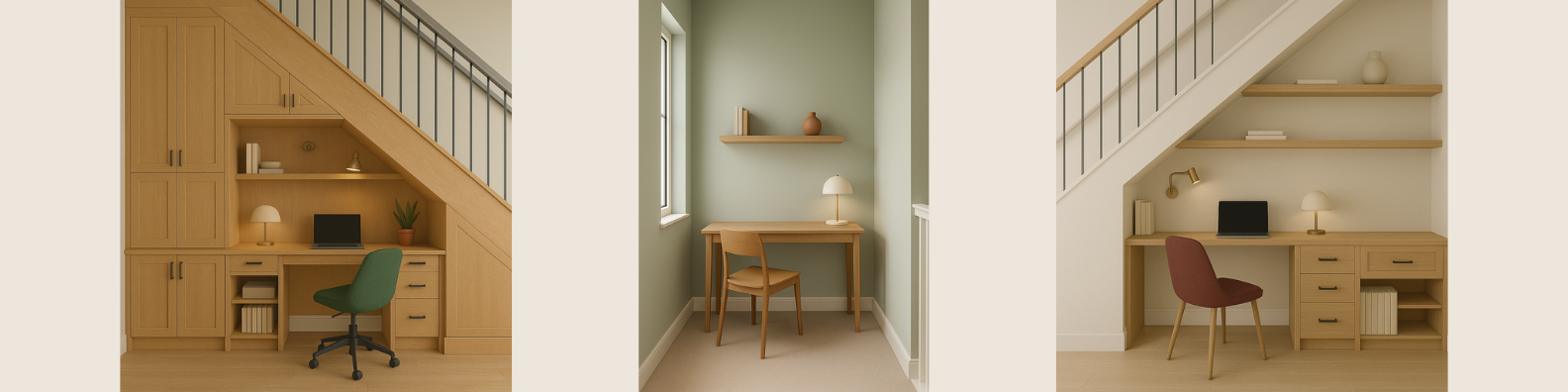
Don’t have a dedicated office? Create one
This is where smart presentation can outperform the floorplan. You don’t need an extra room to create value, you need clarity and intention.
Many homes already have spaces that can be transformed into highly appealing work-from-home zones when presented correctly:
A wide hallway nook can become a compact study with a slim desk, artwork, and good lighting.
A corner of a second living area can be styled as a functional workspace without compromising relaxation zones.
An upstairs landing often works well as a quiet, light-filled study area when properly defined.
A bedroom corner staged as an office + guest setup shows flexibility and efficient use of space.
A built-in study bench in the kitchen or dining area suits families managing daily admin or homework.
The key is to make the space look intentional rather than temporary.
Clear zoning, thoughtful furniture choices, and minimal styling help buyers immediately understand the purpose (and value) of the space.
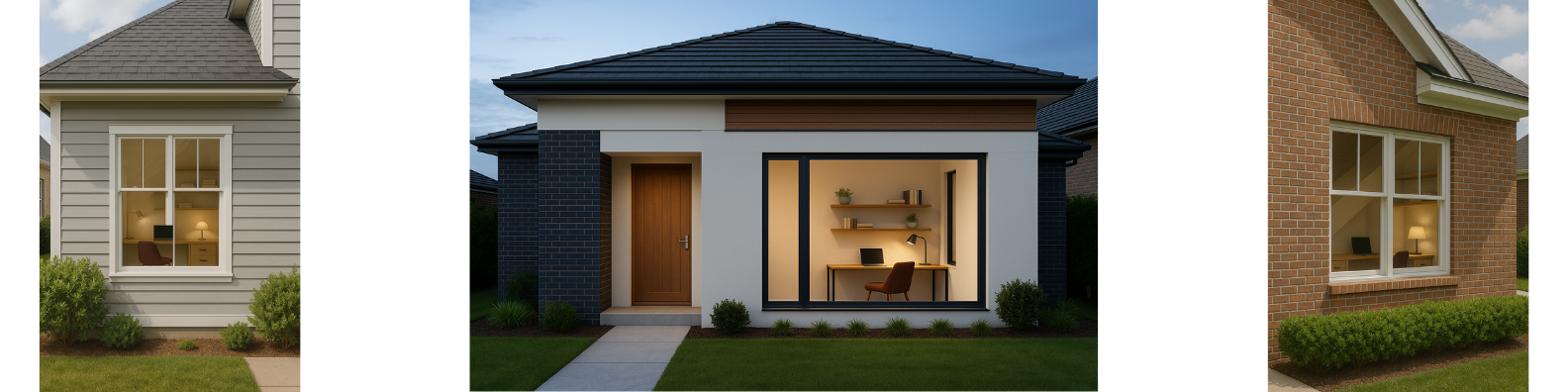
The bigger picture: the home office is part of the “new value equation”
For today’s buyers, value isn’t purely about square metres or bedroom counts. It’s about whether a home genuinely supports modern life. And the reality of modern life is that it no longer happens neatly outside the home.
Work, learning, administration, creativity, and even side hustles now take place under the same roof. Buyers aren’t just asking, “Is this house big enough?”. They’re asking, “Will this home work for the way I live now—and into the future?”
With a significant share of Australians working from home regularly, and many more doing so at least part of the week, the expectation of a functional work-from-home space has become mainstream.
Even buyers who don’t currently work remotely recognise the flexibility a home office provides. It represents choice, adaptability, and resilience in a changing world. As a result, a home office is increasingly viewed as a practical necessity rather than a luxury add-on.
This shift has real implications for sellers.
Homes that clearly present a calm, functional, and well-considered office space tend to resonate more strongly with buyers. They attract longer online views, stronger emotional connection during inspections, and greater confidence in the home’s overall usability.
That confidence matters.
When buyers feel a home supports their lifestyle without compromise, they are more likely to engage deeply, compete, and ultimately place higher value on the property as a whole.
If you’re selling and you’re not sure how to position (or style) your work-from-home space—don’t guess.
The right presentation can change how buyers feel, and how much they’re willing to pay.