
Online First Impressions: Why Photography Sells Homes Before Inspections Do

In today’s property market, buyers often decide whether a home is worth seeing long before they ever step inside it.
Not at the front gate.
Not at the open home.
But on their phone, tablet or laptop, usually within a few seconds of scrolling.
Property photography is no longer just a marketing extra. It is the first inspection, the first emotional connection, and in many cases, the moment a buyer either leans in… or keeps scrolling.
If your home doesn’t perform online, it doesn’t get a fair chance offline.
This article explains why online presentation matters more than ever, what buyers actually respond to, and how sellers can use photography and visual strategy to attract stronger interest, better inspections, and ultimately better offers.
The Reality of How Buyers Shop for Property Today
Over 90% of buyers now begin their property search online. In Australia, this typically means browsing platforms like Realestate.com.au, Domain, and social media listings, often late at night, on the couch, or during short breaks at work.
They are not studying listings carefully at first.
They are scanning.
This initial phase is fast, emotional, and instinctive. Buyers make snap judgements based on:
The lead image
The sense of space and light
Whether the home feels welcoming, modern, or “right”
If the photography doesn’t immediately spark interest, the listing is dismissed, often permanently. No inspection booked. No second chance.
Buyers scroll quickly and subconsciously filter out anything that feels dark, cluttered, dated or unclear. There is rarely a second look. Unlike a physical inspection, where a good agent or atmosphere can change perception, online listings rely entirely on visual impact.
Once a buyer has mentally categorised a property as “not for me,” it almost never re-enters their consideration set, even if the price is reduced later. This is why weak photography can quietly kill momentum before a campaign truly begins.
In a market where buyers compare dozens of homes in minutes, only listings that create an instant emotional response earn attention, saves and inspections.
Photography Is Not Just Documentation — It’s Persuasion
One of the most common mistakes sellers make is assuming property photos simply need to “show the house as it is.”
While that may sound logical, it overlooks how buyers actually make decisions. Buyers don’t analyse listings objectively. They respond emotionally first, then justify their interest later.
Photography that merely documents rooms fails to create that emotional pull.
Effective property photography doesn’t just record space, it communicates lifestyle, flow, and potential. It shows how light moves through the home during the day, how spaces connect, and how each room is meant to be used.
A well-composed image helps buyers imagine themselves living there, not just standing in it.
Buyers are not buying walls and windows. They are buying the idea of morning light spilling across the kitchen bench, family dinners around a generous table, calm and uncluttered bedrooms that feel restful, and outdoor spaces that suggest easy entertaining.
They are buying a feeling. The sense that this place could be home.
Photography must translate those feelings through a screen. This requires careful preparation, thoughtful angles, balanced lighting and a clear visual story.
When photography is done well, buyers slow their scroll, click through the full gallery, and start picturing their own lives unfolding in the space.
That shift, from passive scrolling to active interest, is where enquiries, inspections and strong offers begin.

Why the Lead Image Matters More Than Anything Else
The first image in your listing is the most important marketing asset you have.
It determines:
Whether a buyer clicks
Whether they save the property
Whether they book an inspection
A strong lead image typically:
Shows the most emotionally appealing space (not always the façade)
Feels bright, balanced, and inviting
Gives a clear sense of proportion
Has no visual clutter or distractions
A weak lead image can undo an otherwise good home before buyers ever read the description or check the price. The first photo sets expectations, and when it feels flat, dark or confusing, buyers instinctively assume the rest of the property will disappoint as well.
This reaction happens quickly and subconsciously, long before logic has a chance to step in.
Dark rooms can suggest a lack of natural light.
Poor angles can make rooms feel smaller or awkward.
Messy surfaces and visual clutter signal neglect or effort required.
Unbalanced compositions create a sense that something is “off,” even if buyers can’t explain exactly what it is. Together, these elements quietly raise doubts and trigger caution.
Buyers are naturally risk-averse. When a lead image introduces uncertainty, many simply move on to the next listing rather than investigate further.
In contrast, a strong, well-composed lead image feels safe, inviting and confident, encouraging buyers to click, explore and engage with the home on a deeper level.
Online Buyers Are Comparing — Relentlessly
Your home is not viewed in isolation.
It is judged side-by-side with:
Newly renovated homes
Newly renovated homes set a powerful visual benchmark in online listings. Crisp finishes, modern colour palettes and professionally styled spaces photograph exceptionally well, often making these properties feel more “move-in ready” and low risk to buyers. When your home appears alongside recently renovated listings, buyers instinctively compare presentation before price. Even if your property is larger or better located, weaker photography can make it feel dated by comparison. This is why strong presentation and photography are essential, they help non-renovated or partially updated homes compete visually and remain desirable in crowded search results.
Professionally styled listings
Professionally styled listings are designed to connect emotionally with buyers from the first image.
Furniture placement, colour palettes and décor are carefully chosen to highlight space, flow and functionality, making rooms feel balanced and inviting. T hese homes photograph exceptionally well, often appearing larger, brighter and more cohesive than they are in person.
When buyers compare listings side by side, professionally styled homes tend to feel more “complete” and easier to imagine living in, which can elevate perceived value and influence inspection and offer decisions.
New builds with flawless marketing
New builds with flawless marketing raise buyer expectations across an entire search result page. These listings are typically supported by high-end photography, perfect lighting, clean lines and aspirational styling that highlight lifestyle rather than just structure.
Even though buyers know a brand-new home may sit in a different price bracket or location, the visual standard still influences perception. When established homes appear next to these polished listings, anything less than professional presentation can feel inferior, making strong photography essential to compete for attention and credibility.
Homes priced similarly in your suburb
Homes priced similarly in your suburb are the most direct competition for buyer attention.
When price points align, buyers rely heavily on presentation to decide which properties are worth inspecting. They instinctively compare light, space, style and overall “feel” rather than floor area or specifications.
If a similarly priced home appears brighter, more modern or better presented online, it often wins the inspection, even if your property offers more on paper. This makes strong photography critical to remaining competitive within your immediate market.
Buyers flick between listings rapidly, forming a mental hierarchy of:
“Looks premium”
“Looks average”
“Looks like hard work”
Even well-built homes can land in the wrong category if photography fails to present them properly.
This is why presentation is not about deception. It’s about ensuring your home competes fairly.
Why Good Homes Can Sit Unsold (And It’s Often Visual)
Many sellers feel genuinely confused and frustrated when their home struggles to gain traction. They know the property is well built, well located, and priced in line with the market, yet it attracts few enquiries, quiet open homes, or disappointing offers.
In these situations, it’s easy to assume the market is slow or buyers are being unreasonable. Often, however, the issue isn’t the home itself, it’s the way it’s being presented online.
Poor photography can quietly undermine even strong properties.
Incorrect angles can make rooms feel smaller than they are, while flat lighting can strip character from architectural features that would otherwise add value.
Dark or uneven exposure can hide natural light, making spaces feel closed in rather than open and welcoming.
Cluttered surfaces or awkward compositions draw attention to the wrong details, subtly suggesting work or compromise.
Buyers may not consciously identify these flaws, but they still respond to them. When a home doesn’t photograph well, buyers instinctively lower their expectations before they ever inspect it.
That shift influences how much time they spend considering the property, whether they book an inspection, and ultimately what they believe it is worth.
As expectations drop, so do offers. Not because the home lacks value, but because the presentation failed to communicate it.

Photography Works Best When Combined With Styling
Photography alone cannot compensate for poor presentation.
Before a camera ever comes out, the home needs to be prepared to photograph well. This includes:
Decluttering surfaces
Decluttering surfaces is one of the simplest yet most powerful ways to improve how a home photographs.
Benchtops, tables and vanities crowded with everyday items create visual noise that distracts buyers and makes spaces feel smaller and less functional.
Clear surfaces allow the eye to rest and help buyers focus on the room itself rather than personal belongings.
In photography, simplicity translates to calm and order, which subconsciously signals a well-maintained home and makes spaces feel more spacious, balanced and appealing online.
Correct furniture placement
Correct furniture placement plays a critical role in how rooms are perceived in photographs. Poorly positioned furniture can block natural light, interrupt sightlines and make spaces feel cramped or awkward.
In contrast, thoughtful placement helps define each room’s purpose, highlights flow and creates a sense of proportion.
By allowing clear walkways and visual balance, furniture guides the viewer’s eye through the space.
Well-placed furniture doesn’t just make a room look better. It helps buyers understand how the space can be lived in.
Removing personal items
Removing personal items is essential to helping buyers emotionally connect with a property. Family photos, collections and highly personal décor remind buyers that the home belongs to someone else, making it harder for them to imagine themselves living there.
In photography, these items also create visual distractions that pull attention away from the space itself.
A more neutral, pared-back environment photographs cleaner and more timeless, allowing buyers to project their own lifestyle onto the home rather than feeling like a visitor in someone else’s space.
Softening harsh contrasts
Softening harsh contrasts helps create a more balanced and inviting look in property photography. Strong colour clashes, heavy patterns or sharp light-to-dark transitions can dominate images and distract from the space itself.
In photos, these contrasts often appear more intense than they do in person, making rooms feel busy or uncomfortable.
By introducing softer tones, consistent colour palettes and gentle transitions between light and shadow, spaces photograph more calmly and cohesively, allowing buyers to focus on layout, light and overall feel rather than visual tension.
Ensuring symmetry and balance
Ensuring symmetry and balance helps rooms feel calm, intentional and visually appealing in photographs. When furniture, artwork or lighting is unevenly placed, images can feel unsettled or awkward without buyers consciously knowing why.
Balanced arrangements create a sense of order that is pleasing to the eye and easy to process on screen.
In photography, symmetry draws attention to the space itself rather than its contents, making rooms appear more harmonious, spacious and well considered. Qualities buyers instinctively associate with well-presented, higher-value homes.
Styling doesn’t mean filling a home with expensive furniture. It means guiding the eye and defining how each space is used.
A styled home photographs better. A well-photographed home attracts better buyers.
Light, Space, and Angles: What Buyers Actually Respond To
Professional photographers understand that buyers respond to:
Natural light over artificial brightness
Clear lines of sight
Logical flow between spaces
A sense of openness, even in smaller homes
Correct angles can:
Reveal depth
Reduce visual noise
Improve spatial understanding
Highlight architectural strengths
Incorrect angles can distort rooms and quietly undermine buyer confidence. Wide lenses used without care can stretch walls, skew proportions and make spaces feel unnatural, while low or poorly chosen viewpoints can exaggerate ceilings or compress floor space in ways that don’t reflect reality.
When buyers sense that images feel misleading or inconsistent, even subconsciously, it creates mistrust. They begin to question what the home is really like and whether the listing is hiding flaws.
This is why experienced property photographers are worth the investment. They understand how buyers read images and how certain angles influence perception.
Their goal isn’t to deceive, but to present spaces honestly and attractively, using perspective, height and framing that feel true to life.
By creating images that align with what buyers expect to experience in person, professional photographers build confidence, encourage inspections and support stronger emotional engagement from the outset.
The Role of Floor Plans and Visual Context
Photography performs even better when supported by:
Clear floor plans
Logical image sequencing
A visual story that mirrors how buyers walk through the home
Buyers want to understand how spaces connect because flow directly affects how a home feels to live in. When images jump randomly between rooms or fail to show how areas relate to one another, buyers are left trying to piece the layout together themselves. This creates mental effort and uncertainty, both of which work against engagement.
Online, where attention spans are short, confusion is often enough for buyers to move on to the next listing.
Listings that overwhelm visually with too many similar images, inconsistent angles or no clear progression, can feel disorganised and hard to interpret.
In contrast, a well-sequenced photo gallery mirrors the experience of walking through the home, helping buyers intuitively understand how spaces flow from one to the next.
When photography, layout and flow align, buyers feel oriented and confident. They can picture daily routines, entertaining, and movement through the home.
That clarity reduces perceived risk, builds emotional connection and makes the decision to enquire or book an inspection feel easy and natural.
Emotional Connection Happens Online First
By the time buyers attend an inspection, many have already formed an emotional attachment.
They’ve imagined:
Where their furniture would go
How they’d live in the space
What life might feel like there
That emotional groundwork is laid online, often well before a buyer ever steps through the front door. Through images, buyers begin forming expectations, imagining how the home might fit their lifestyle and deciding whether it feels like a place they could belong.
By the time they attend an inspection, many buyers already have a clear emotional position, positive or negative, based largely on what they’ve seen online.
When presentation is strong, inspections become confirmation rather than discovery. Buyers walk through the home looking for reassurance that it feels as good in person as it did on screen.
This mindset encourages confidence, attachment and faster decision-making.
Homes that fail to create this early connection enter inspections at a disadvantage. Buyers arrive sceptical, focused on flaws rather than potential. To regain attention, sellers are often pushed toward price reductions or extended campaigns, both of which can weaken negotiating power.
Strong online presentation helps avoid this cycle by building belief and momentum from the very beginning.
Why DIY Photography Rarely Works
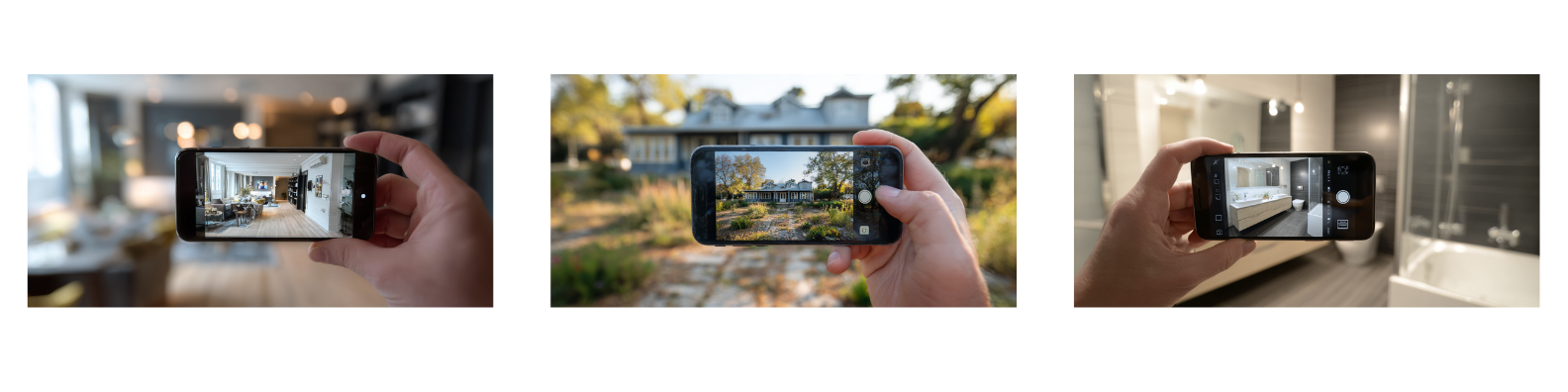
Smartphones have improved dramatically, but property photography is still a specialist skill.
Common DIY pitfalls include:
Inconsistent lighting
Cropped spaces
Poor white balance
Unflattering perspectives
Distracting personal items
Even small errors compound across a listing, subtly undermining buyer confidence with each image.
A slightly crooked vertical line, inconsistent lighting between rooms, an awkward crop or a cluttered corner might seem insignificant on its own.
But when these issues appear repeatedly throughout a photo gallery, they create a pattern that signals poor presentation or lack of care. Buyers may not consciously identify each flaw, but collectively they influence how the home is perceived.
Buyers don’t analyse why something feels “off”. They simply move on.
Online property searching is fast and intuitive, driven more by emotion than logic. If a listing doesn’t feel easy to process or visually appealing, buyers rarely stop to investigate why. They scroll past and focus their attention on homes that feel clear, polished and inviting.
In a competitive market, that split-second decision can be the difference between strong interest and complete disengagement.
Presentation Is a Strategy, Not a Cost
High-performing listings don’t happen by accident.
They are the result of:
Preparation
Strategic styling
Professional photography
Clear visual storytelling
When done well, presentation:
Increases enquiry volume
Strong presentation directly increases enquiry volume by capturing attention early and holding it longer.
When a listing stands out visually, buyers are more likely to click through the full gallery, save the property and take the next step by requesting information or booking an inspection.
High-quality photography builds confidence and reduces hesitation, making it easier for buyers to engage.
As a result, well-presented homes typically attract more enquiries, broader buyer interest and greater momentum from the moment they launch online.
Attracts more qualified buyers
Attracting more qualified buyers means drawing interest from people who are genuinely aligned with the property’s value, style and lifestyle offering.
Strong presentation sets clear expectations, helping buyers self-select before enquiring or inspecting.
When photography accurately and attractively communicates space, flow and quality, it appeals to buyers who are ready and able to act, rather than casual browsers. This leads to inspections with higher intent, more meaningful conversations, and offers that better reflect the home’s true market position.
Improves negotiation leverage
Strong presentation improves negotiation leverage by creating competition and confidence early in the campaign. When multiple buyers are engaged and emotionally invested, sellers are less reliant on price concessions to generate interest.
Well-presented homes signal quality and care, making buyers more willing to meet expectations rather than negotiate aggressively.
This shift in dynamic allows sellers and agents to negotiate from a position of strength, focusing on favourable terms and timing rather than defending the asking price or responding to low initial offers.
Reduces time on market
Strong presentation helps reduce time on market by generating momentum from the moment a property launches online.
When photography and visual storytelling are clear, appealing and accurate, buyers engage sooner and with greater confidence. Early interest leads to quicker inspections, stronger initial offers and less need for campaign adjustments.
Homes that present well often avoid the stagnation that can occur when listings sit unsold, helping sellers achieve outcomes faster while maintaining perceived value and negotiating strength.
In many cases, the investment of professional photography and styling, pays for itself many times over.

A Note for Sellers: You Only Get One Online Launch
The first few weeks of a listing are critical, as this is when a property has its strongest opportunity to capture attention and build momentum. New listings are actively sought out by buyers, agents and online platforms alike.
Buyers who have been watching the market closely are alerted immediately, and many will make quick decisions about whether a home is worth inspecting based purely on its initial presentation.
During this early phase, online platforms also give new listings greater visibility. Algorithms favour fresh content, meaning your property is more likely to appear in searches, alerts and suggested listings. This increased exposure, combined with buyer curiosity, creates a powerful window where urgency and competition can be generated.
If the online presentation is weak at launch, that opportunity is often lost.
Buyers who dismiss the listing early rarely return, even if photos are updated or the price is adjusted later. The property can become “stale,” with reduced engagement and growing buyer scepticism.
Recovering momentum after a poor launch is difficult and often requires concessions that sellers would prefer to avoid.
Getting the presentation right from the beginning helps maximise interest, protect value and set the tone for a successful campaign.
How Designz2Go Helps Sellers Win Online
At Designz2Go, we specialise in helping homes present their absolute best — before the photography happens.
Our approach focuses on:
Understanding your likely buyer
Preparing spaces to photograph beautifully
Identifying visual strengths and weaknesses
Providing clear, practical recommendations
Helping homes compete with higher-priced or renovated listings
Whether you’re selling locally or remotely, we help ensure your online presence works for you, not against you.