
Preparing Your Home for Different Buyer Types: Families vs Downsizers vs Investors

Adjusting Your Presentation Strategy Based on Likely Buyer Demographics
One of the biggest mistakes sellers make is trying to appeal to everyone.
While it may sound logical to cast the widest possible net, the reality is very different. Homes don’t sell best when they appeal to all buyers equally.
They sell best when they resonate strongly with the right buyers.
Families, downsizers and investors all look at property through very different lenses. They prioritise different features, interpret spaces differently and make decisions for very different reasons.
When your presentation strategy aligns with the most likely buyer demographic, your home feels more relevant, more desirable and more valuable.
This article breaks down how to prepare and present your home depending on whether your most likely buyer is a family, a downsizer, or an investor, and why tailoring your approach can make a meaningful difference to interest, inspections and offers.
Why Buyer Demographics Matter More Than Ever
Buyers today are highly informed and time-poor. They scroll fast, inspect selectively and dismiss listings quickly if a property doesn’t appear to suit their needs.
Presentation is how buyers decide:
Is this home right for me?
Does it fit my lifestyle or goals?
Is it worth inspecting?
When a home is presented in a way that speaks clearly to a specific buyer group, buyers feel understood rather than marketed to.
The layout, styling and visual cues align with what they value, making it easier for them to imagine the home fitting their lifestyle or goals. That sense of relevance reduces doubt and mental friction.
Buyers spend less time questioning whether the property will work for them and more time picturing themselves living there or benefiting from the purchase. This emotional alignment builds confidence, and confident buyers act with greater intent.
They are more decisive, move faster through the buying process, and are less inclined to negotiate aggressively because the home already feels like the right fit.

Identifying Your Most Likely Buyer
Before adjusting presentation, sellers need to step back and ask:
Who is most likely to buy this home?
Who has bought similar homes in this area?
What life stage does this home naturally suit?
Identifying the most likely buyer begins with reading the clues your property already presents to the market.
Location is one of the strongest indicators, proximity to school catchments, parks, shops and public transport often signals whether families, downsizers or investors are most active in the area.
Walkable neighbourhoods with cafés and services tend to attract downsizers, while school zones and family amenities draw long-term owner-occupiers.
Layout also plays a major role. The number of bedrooms, presence of stairs, separation of living areas and whether the design is open-plan or compact all influence who the home naturally suits.
Maintenance level is another key signal: low-maintenance homes appeal to downsizers and investors, while larger, more hands-on properties often suit families. Yard size and outdoor usability further narrow the field, as does the price point, which filters buyer demographics immediately.
Once the primary buyer type is identified, presentation decisions become far clearer and more strategic. Styling, photography and messaging can then be aligned to attract the buyers most likely to act.
Presenting for Families: Space, Function and Lifestyle
What Families Care About Most
Family buyers tend to assess homes through a very practical lens because they are thinking about how the property will function every day, not just how it looks at inspection.
Practical layouts matter because families need spaces that work together. Open living areas for connection, separate zones for privacy, and bedrooms that allow parents and children to coexist comfortably.
Bedroom numbers and separation are important for growing families, guests and work-from-home needs, while ample storage helps manage the reality of school bags, toys and everyday clutter.
Safety is another major consideration, from secure fencing and safe stair design to clear sightlines between indoor and outdoor areas.
Outdoor space is valued for play, entertaining and downtime, particularly when it feels usable and easy to supervise.
Proximity to schools, parks, shops and services further supports long-term liveability. Ultimately, families are buying for daily life (routines, convenience and comfort) not just surface-level aesthetics.
How to Adjust Presentation for Family Buyers
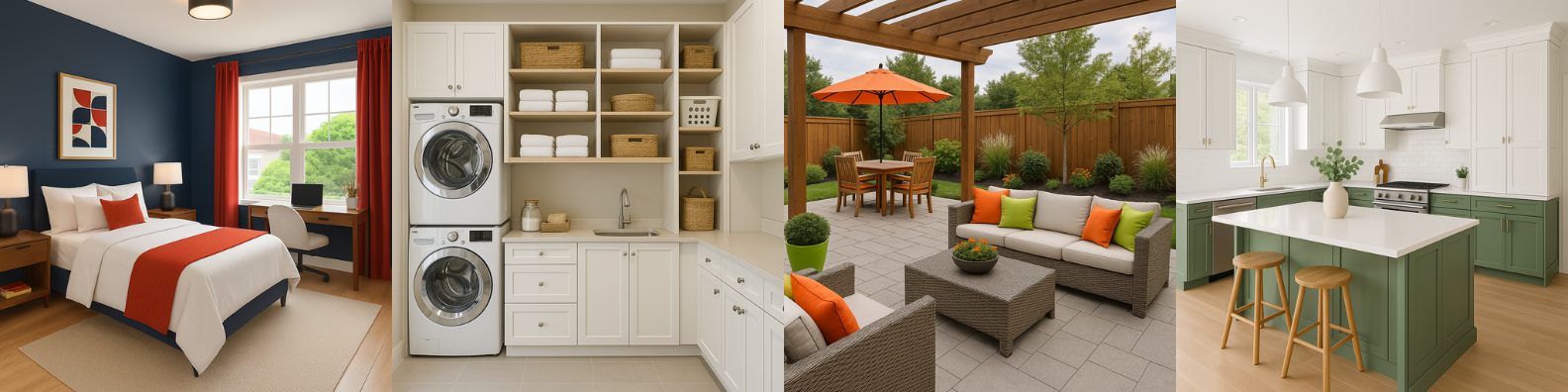
1. Clearly Define Family Zones
Show how the home works for real life. Living rooms should feel spacious and durable, not formal. Dining areas should comfortably fit a family-sized table. Secondary living spaces (rumpus rooms, media rooms) should be clearly styled to show purpose.
2. Emphasise Bedrooms and Flexibility
Children’s bedrooms should feel calm and adaptable, not overly themed. If a bedroom could double as a study or guest room, style it neutrally to show flexibility.
3. Highlight Storage
Families accumulate belongings. Clear, organised wardrobes, linen cupboards and garage storage photograph extremely well and reduce buyer anxiety.
4. Showcase Outdoor Living
Yards, patios and alfresco areas are critical for families. Even small outdoor spaces should feel usable, safe and low maintenance.
5. Safety and Practicality Matter
Secure fencing, good lighting, and clear sightlines between living areas and outdoor spaces all matter. Avoid styling choices that feel fragile or impractical.
Overall Goal:
Help families imagine day-to-day life working smoothly in the home.
Presenting for Downsizers: Ease, Comfort and Low Maintenance
What Downsizers Care About Most
Downsizers are often asset-rich but highly lifestyle-focused, approaching the buying decision with a clear sense of what they want to simplify. Ease of living is paramount.
Homes that are easy to move through, easy to maintain and easy to live in day to day hold strong appeal. Single-level layouts or minimal stairs reduce physical effort and future-proof the home, while low-maintenance finishes and gardens minimise ongoing work.
Storage remains important, but downsizers want it to feel intentional and organised rather than overwhelming. They are often reducing possessions, not eliminating them, so practical storage without visual clutter adds reassurance.
Comfort and quality also carry significant weight. Good natural light, well-proportioned rooms and quality finishes signal a home that feels considered and enjoyable to live in.
Proximity to services such as shops, medical facilities and transport supports independence and convenience.
Downsizers are not buying more space; they are buying better space. Homes that feel calm, efficient and thoughtfully designed for the next stage of life.

How to Adjust Presentation for Downsizers
1. Emphasise Flow and Accessibility
Clear walkways, uncluttered rooms and logical furniture placement are essential. Avoid overfurnishing, which can make spaces feel tight or difficult to navigate.
2. Highlight Comfort Over Scale
Living spaces should feel calm, balanced and inviting rather than oversized or dramatic. Soft furnishings, neutral palettes and good lighting help create this mood.
3. Show Low-Maintenance Living
Keep gardens simple and tidy. Highlight easy-care materials, neat landscaping and practical outdoor spaces that don’t suggest hard work.
4. Style for Quality, Not Quantity
Downsizers respond well to a sense of quality, good finishes, thoughtful details and a feeling of care. Avoid overly trendy or youthful styling.
5. Clarify Storage Solutions
Downsizers still value storage, but they want it to feel organised and intentional. Clean garages, linen storage and pantry areas add reassurance.
Overall Goal:
Position the home as easy, comfortable and future-proof.
Presenting for Investors: Clarity, Condition and Return
What Investors Care About Most
Investors tend to approach property with a more analytical mindset, but that doesn’t mean presentation is unimportant.
While they may be less emotionally driven than owner-occupiers, investors are still highly visual and form quick judgements based on what they see online. Their focus is on whether a property appears easy to own, easy to rent and unlikely to cause problems.
Condition is critical.
Clean, well-maintained homes suggest fewer immediate costs and lower ongoing risk.
Rentability follows closely behind. Investors assess whether the layout, number of bedrooms and overall presentation will appeal to a broad tenant market. Efficient layouts that maximise usable space are favoured, while awkward configurations or poorly defined rooms can raise concerns about tenant demand.
Maintenance is another key consideration. Investors are drawn to properties that look straightforward to manage, with durable finishes and low-maintenance outdoor areas. Visual cues that suggest neglect or future repairs can quickly deter interest.
Appeal to tenants also matters, even if it’s assessed subconsciously. Bright, neutral and functional spaces are easier to imagine being consistently rented.
Ultimately, investors are asking one core question: Does this property perform?
Strong presentation helps answer that question with confidence.

How to Adjust Presentation for Investors
1. Prioritise Clean, Neutral Presentation
Investors want properties that feel easy to rent. Neutral colours, clean lines and uncluttered spaces photograph well and appeal to a broad tenant base.
2. Highlight Layout Efficiency
Clear room definitions and functional flow matter more than styling flair. Show how the home works logically and efficiently.
3. Emphasise Condition and Care
Fresh paint, clean flooring and well-maintained fixtures reassure investors that the property won’t require immediate spend.
4. Avoid Over-Styling
Highly personalised or luxury styling can distract investors. Keep presentation simple, practical and easy to interpret.
5. Show Rental Appeal Subtly
Well-presented kitchens, bathrooms and low-maintenance outdoor areas help investors visualise tenant demand without turning the listing into a rental ad.
Overall Goal:
Reduce perceived risk and highlight ease of ownership.
What Happens When Presentation Doesn’t Match the Buyer
When presentation is mismatched with the likely buyer, even a good home can struggle to gain traction. The issue isn’t the property itself, but how it is being interpreted by the people viewing it. Each buyer group views space through a different lens, and when presentation doesn’t align with those expectations, friction is created.
For family buyers, a home that is styled too minimally or too formally can feel cold, impractical or difficult to live in day to day. If rooms lack clear purpose or storage isn’t evident, families may struggle to see how the home would support routines, children and everyday life.
Downsizers, on the other hand, can feel overwhelmed by cluttered styling, oversized furniture or overly busy décor. When a home feels hard to navigate or high maintenance, caution quickly sets in.
Investors are the most unforgiving. If presentation suggests risk, inefficiency or unnecessary work, they often disengage entirely and move on without a second thought.
These mismatches have predictable outcomes: fewer enquiries, inspections that lack genuine intent, and offers that are softer than expected. Campaigns drag on as momentum fades and buyer confidence erodes.
Importantly, the home itself hasn’t changed. Its size, location and fundamentals remain the same. What has changed is its relevance.
When buyers can’t immediately see how a property fits their needs or goals, they mentally discount it, and that discount shows up in time on market and price.
One Home, Multiple Buyers: Finding the Balance
Some homes naturally appeal to more than one buyer group, particularly well-located properties with flexible layouts or broad price appeal. In these cases, the goal of presentation is not to push the home strongly toward one demographic, but to keep it open, adaptable and easy to interpret.
Neutral and flexible presentation allows different buyers to see how the home could work for them without feeling excluded or overwhelmed.
Remaining neutral doesn’t mean making the home feel bland. It means using balanced colour palettes, simple furnishings and timeless finishes that don’t dominate the space or suggest a narrow lifestyle.
Avoiding extremes in styling is critical.
Overly family-focused presentation can deter downsizers or investors, while ultra-minimal or high-end styling can make families feel disconnected or cautious. The aim is to strike a middle ground that feels considered but not prescriptive.
Layout clarity and overall condition should take priority. Clearly defined rooms, logical flow and well-maintained spaces help all buyer types quickly understand how the home functions.
When buyers don’t have to work to interpret the layout, they are more likely to engage emotionally. This clarity allows buyers to project their own lifestyle onto the property, whether that’s family living, low-maintenance comfort or rental potential.
The key is to guide without forcing, highlighting the home’s strengths while leaving room for imagination rather than confusion.
Why Strategic Presentation Outperforms Generic Styling
Generic styling focuses on making a home look broadly appealing, clean and pleasant, but it often stops short of influencing buyer behaviour. It aims to look “nice” without necessarily considering who the buyer is, what they value, or how they make decisions.
Strategic presentation, by contrast, is intentional. Every choice, from furniture placement to colour palette and room definition, is made with a specific buyer in mind and a clear outcome as the goal.
When presentation is aligned with buyer demographics, emotional connection increases. Buyers see themselves in the space more easily because it reflects their lifestyle, priorities and expectations. That emotional engagement carries through to inspections, which tend to be more focused and more qualified. Buyers arrive already believing the home could work for them, rather than trying to be convinced on the spot.
Strategic presentation also strengthens negotiation position.
When buyers feel the home is a good fit, they are less inclined to push aggressively on price or terms. Competition and confidence replace hesitation. As a result, time on market is often reduced, because momentum builds early and the campaign feels purposeful rather than reactive.
Buyers don’t just buy homes. They buy fit.
When a property feels relevant and aligned with their needs, decisions become easier, faster and more decisive.
Strategic presentation helps ensure your home feels like the right fit to the right buyer from the very first impression.
How Designz2Go Helps Sellers Target the Right Buyers
At Designz2Go, we help sellers identify:
Their most likely buyer demographic
How buyers will perceive their home online
Which presentation choices matter most
Where to focus effort and where not to overspend
Our guidance is practical, market-aware and tailored, not generic styling advice.
Present to the Buyer Who Matters Most
If you’re preparing to sell, the smartest question isn’t “How do I make my home look nice?”
It’s “Who am I selling to and what do they care about?”
👉 Book a Designz2Go Property Presentation Review
Get expert insight into how to position your home for the right buyer, before photography and marketing begin.
The right presentation doesn’t just attract buyers.
It attracts the right buyers. And that’s where strong results begin.