
Selling While Living in the Home: How to Keep It Inspection-Ready With Kids, Pets & Work
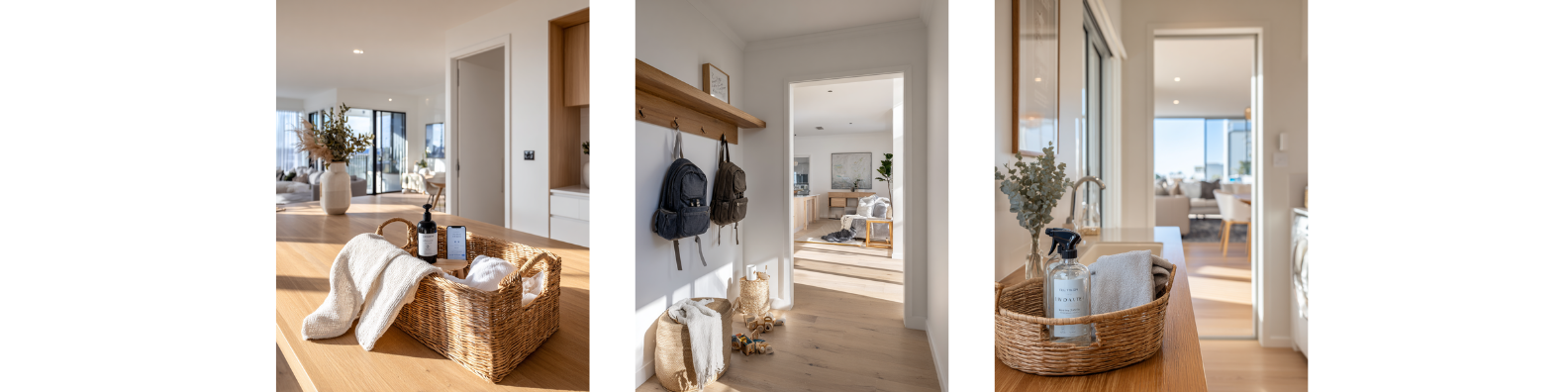
1) The reality (and the opportunity) of living-in listings
Selling while you’re still living in the home can feel like you’re permanently “on show.” Between school runs, work calls, muddy paws, and dinner prep, the idea of maintaining a magazine-perfect house is exhausting. The good news: buyers don’t need perfection. They need confidence.
When a home presents as clean, calm, and well-cared-for, buyers assume the same is true behind the scenes. That maintenance has been kept up, there are fewer surprises, and the property will be easy to live in.
That emotional comfort translates into stronger offers, fewer objections, and a smoother negotiation.
Your goal isn’t to pretend no one lives there. It’s to remove friction. Most buyers will forgive the normal signs of life (a toy basket, a dog bed, a laptop on a desk) as long as the home still feels spacious, fresh, and simple to understand.
What buyers don’t forgive are the “effort signals”: strong odours, sticky surfaces, messy bathrooms, overflowing bins, and clutter that makes rooms feel smaller than they are.
This blog is a practical system for busy households: a standard to aim for, routines that don’t require hours every day, and strategies that work specifically for kids, pets, and work-from-home. You’ll be able to handle short-notice inspections without panic, and you’ll protect your sanity while still presenting your property at its best.
Think of it like this: you’re not “cleaning constantly.” You’re running a simple presentation system.
One that keeps the home ready for the next buyer to walk in and fall in love.
2) Set your non-negotiable standard (the buyer lens)
If you try to keep everything perfect, you’ll burn out in a week. Instead, decide what must always be “inspection-ready” and what can be lived-in, as long as it’s contained.
Buyers make decisions quickly, and they anchor their judgement on a handful of cues.
Here are the five things buyers notice first (even if they don’t say it out loud):
Smell: Odours create instant resistance. Pet smells, damp towels, bins, and strong air fresheners all trigger suspicion.
Floors: Crumbs, fur, and marks are read as “hard work.” Clean floors make the whole house feel cleaner.
Kitchen benches + sink: If the kitchen looks chaotic, buyers assume the home is hard to manage.
Bathrooms: A clean bathroom signals hygiene and care. A messy one is an emotional deal-breaker.
Entry + main living spaces: If the first impression is clutter, buyers stop seeing space and start seeing tasks.
A useful standard is the “hotel rule”: does the home feel like it could host a guest with little notice? Not sterile, just fresh, tidy, and easy to move through.
This standard should be visible in the areas that matter most: entry, living, kitchen, main bedroom, and the primary bathroom. These are the “selling zones.” If you get these right, the rest of the home can be simpler. Bedrooms can be neat but not styled, the garage can be orderly but not perfect, and kids’ rooms can be functional as long as the floor is clear and the bed is made.
The secret is consistency. A buyer who visits twice should see the home presented the same way both times. Consistency builds trust, and trust builds price.
3) Build the system: the 15-minute reset + the 60-second drill
The easiest way to stay inspection-ready is to stop relying on motivation and start relying on routine. You’re creating a repeatable rhythm that makes “ready” your default, not a last-minute scramble.
The 15-minute reset (daily):
This is your baseline. Set a timer. Everyone helps. Focus on what buyers feel, not what you notice as a homeowner.
Clear benches (kitchen and bathrooms)
Quick wipe of sink + taps
Dishes away or in dishwasher
Floors: fast vacuum or sweep in high-traffic areas
Beds: pull up covers (doesn’t need perfection)
One laundry action: start, switch, or fold (never let it pile up)
Done daily, this prevents the build-up that causes stress. You’re not deep cleaning, you’re keeping momentum.
The 60-second surprise-inspection drill:
This is for those calls: “We have a buyer in 20 minutes.”
Open blinds, turn on lights
Put bins out of sight
Quick wipe of kitchen bench + sink
Bathroom reset: wipe vanity, close toilet lid, replace towel
Stash loose items into a basket/tub (more on this below)
Final step: neutral fresh air (open windows for 5 minutes if possible)
Create two zones:
Show zones: Entry, living, kitchen, main bedroom, main bathroom. These should stay consistently tidy.
Live zones: Kids’ bedrooms, study, laundry, garage. These can be lived-in, but must be closable (doors shut) or containable (baskets, tubs).
This approach removes the pressure to “do everything” and replaces it with a simple operating system you can run even on busy days.

4) The Drop Zone + strategic declutter (the fastest path to calm)
Most homes don’t look messy because they’re dirty. They look messy because they have no system for “incoming life.”
School bags, shoes, mail, drink bottles, dog leads, hats, cords, laptops, and half-finished projects tend to land wherever there’s space. The fix is simple: create a Drop Zone.
Your Drop Zone should include:
Hooks (bags, hats, leads)
A basket or tub per person (quick stash)
A shoe tray or mat
A small “paper catcher” for mail (sorted weekly)
A charging corner that hides cords
Place it near the entry or the garage door, wherever you actually enter. This stops clutter migrating into the rooms buyers care about.
Next comes strategic decluttering, not emotional decluttering. You’re not deciding what to keep forever. You’re deciding what shouldn’t be visible during a sales campaign.
Start with “space thieves”:
Kitchen benchtops (keep only 1–2 intentional items)
Fridge surface (remove magnets, notes, school artwork)
Bathroom vanity + shower ledges (minimal products)
Laundry surfaces and baskets (contain and hide)
Floors in living areas (nothing should “live” on the floor)
Then handle storage buyers will open:
Wardrobes: aim for 30–40% empty so they feel generous
Linen cupboards: neat stacks, not stuffed shelves
Pantry: quick grouping and labels if you want bonus points
Use the 3-box method: Store / Donate / Relocate. Storage tubs are your friend. A tidy home is often just a home with fewer visible decisions.
The biggest emotional win is this: once clutter is contained, cleaning becomes faster. And once cleaning becomes faster, staying ready becomes realistic.
5) Keeping it inspection-ready with kids (without constant battles)
Kids aren’t the problem, unmanaged systems are. The goal is to make it easier for kids to succeed than to fail. You don’t need a perfect playroom. You need fast resets and clear “homes” for the chaos.
Use the “one-basket rule” in main areas:
In the living room, there should be exactly one toy basket (or two, max). If toys don’t fit, there are too many out. This keeps the room looking intentional, not overrun. Rotate toys weekly rather than having everything accessible at once.
Create a simple daily checklist kids can do:
Keep it visual and short. For example:
Put toys in the basket
Shoes to the tray
Bag on the hook
Drink bottle to the kitchen
Make bed (pull blanket up)
If your child is young, do it together for two minutes. You’re training a habit, not demanding perfection.
Keep bedrooms “buyer safe,” not Pinterest styled:
Buyers understand children’s rooms, but they still need to read the room’s size and function. Clear floors matter more than perfectly arranged shelves. Make the bed, contain the toys, and reduce wall clutter so the room feels calmer.
Contain school life:
School paperwork, craft projects, and artwork can take over fast. Choose one display spot (a small board or a single wall strip). Everything else goes in a folder or tub. Buyers don’t need to see 40 drawings on the fridge.
The key is consistency. When kids know the reset routine and the storage is easy, you’ll spend less time arguing and more time maintaining a home that sells well.
6) Pets: eliminate the deal-breakers (smell, fur, mess)
Pets are a huge emotional factor in buyer reactions. Some buyers love them. Others immediately worry about odour, stains, and allergies. Your job is to remove the “pet evidence” from the buyer experience — without making your pet miserable.
Smell is priority #1.
Strong air fresheners often backfire because buyers assume you’re masking something. Instead:
Wash pet bedding weekly
Use an enzyme cleaner on repeat spots (especially on rugs)
Empty litter trays daily (and keep them discreet)
Keep food bowls tidy and ideally out of main walkways during inspections
Ventilate: fresh air beats fragrance every time
Fur management that actually works:
Quick vacuum of high-traffic areas daily (2–5 minutes)
Lint roller by the front door (and in the car)
Use washable throws that look intentional on sofas
Brush pets outside regularly so shedding happens before it hits your floors
Plan where pets go during inspections.
This is the difference between calm and chaos. Options:
A friend/relative for open homes
A short walk or car trip (bonus: removes pet smell temporarily)
A contained outdoor area that is tidy and safe
A crate in the car for the 20-minute window
Also think about buyer comfort: barking, jumping, or a cat on the kitchen bench can disrupt the emotional flow of an inspection. A simple plan keeps everyone happier, including you.
When pet presentation is handled well, buyers stop thinking “problem” and start thinking “home.”

7) Work-from-home: sell a lifestyle, not a workstation
Work-from-home spaces can be a selling feature, but only if they read as calm and purposeful. A cluttered desk signals stress. A styled workspace signals lifestyle.
Your goal: “This home supports modern living.”
That means the office (or desk corner) should look functional, minimal, and easy to picture for different buyer types: a study nook, a gaming setup, a homework station, or a small business admin space.
Do a cable and surface reset:
Hide cords (clips, cable box, or a simple basket)
Remove papers, invoices, and personal documents
Keep only a laptop, one notebook, and one pen cup visible
Add one neutral styling cue: a plant, a lamp, or a simple framed print
If your workspace is in a living area:
Treat it like a “study nook.” Buyers accept this if it’s tidy and compact. The trick is to visually define it: a clean chair, one tidy surface, and a clear boundary (rug, lamp, or shelf).
Protect privacy without wrecking presentation:
Store sensitive work material in a portable folder or tub that goes into a cupboard quickly. This also makes surprise inspections easy. You can clear the desk in under a minute.
A tidy work zone doesn’t just look better. It makes the home feel more spacious and more premium, which supports stronger buyer emotions and better offers.
8) Inspections made easy: open homes, private viewings, the kit, and the weekly rhythm
Inspections are where your system gets tested. The easiest way to stay calm is to treat inspections like a routine event, not an interruption.
Open homes:
Plan for volume and speed. Before you leave:
Lights on, blinds up
Kitchen: benches clear, sink empty
Bathrooms: towels straight, toilet lids closed
Floors: quick vacuum
Bins out of sight
Pet plan activated
Private inspections:
You can tailor slightly. If the buyer is a family, make the kids’ spaces feel practical and safe. If it’s downsizers, make the living spaces feel spacious and low-maintenance. Keep it subtle, you’re simply highlighting the most relevant strengths.
Create an inspection kit (so you never scramble):
Keep these together in a caddy:
Microfibre cloth + bench spray
Bathroom wipes + toilet cleaner tabs
Glass cleaner (for mirrors and splashbacks)
Lint roller
A “stashing basket” (the magic basket for last-minute items)
Odour neutraliser (light and neutral, not perfumed)
Follow a weekly rhythm so it doesn’t build up:
Mon: floors (full house)
Tue: bathrooms
Wed: kitchen detail (splashback, appliances, fridge front)
Thu: bedrooms + linens
Fri: entry, windows/door glass, outdoor quick tidy
This rotation means your home is always close to inspection-ready without a massive clean right before each viewing.
The payoff is huge: less stress, better presentation, and a home that consistently “shows” the way your listing photos promise.

Closing: You don’t need perfect. You need repeatable
Selling while living in the home is hard, but it’s absolutely manageable when you focus on systems instead of standards that no real family can maintain.
Keep your selling zones consistently tidy, contain the rest, and run a daily reset that protects your energy.